
Ikkat (or Ikat) is a traditional textile dyeing and weaving technique known for its beautifully blurred, feathered patterns. The word “Ikat” comes from the Indonesian word mengikat, meaning “to tie” or “to bind.”
IKAT
Woven Project
NEW GEOMETRIES
In this project, I delved into experimenting with fabric construction techniques, particularly exploring how geometric shapes can evolve and transform during the process. The irregularity of the yarns became a key element, allowing for unexpected and organic shapes to emerge, adding a dynamic layer to the design. I also incorporated the double cloth weaving technique, which opened up a creative avenue for playing with contrasting colors and textures, adding depth and complexity to the final outcome.


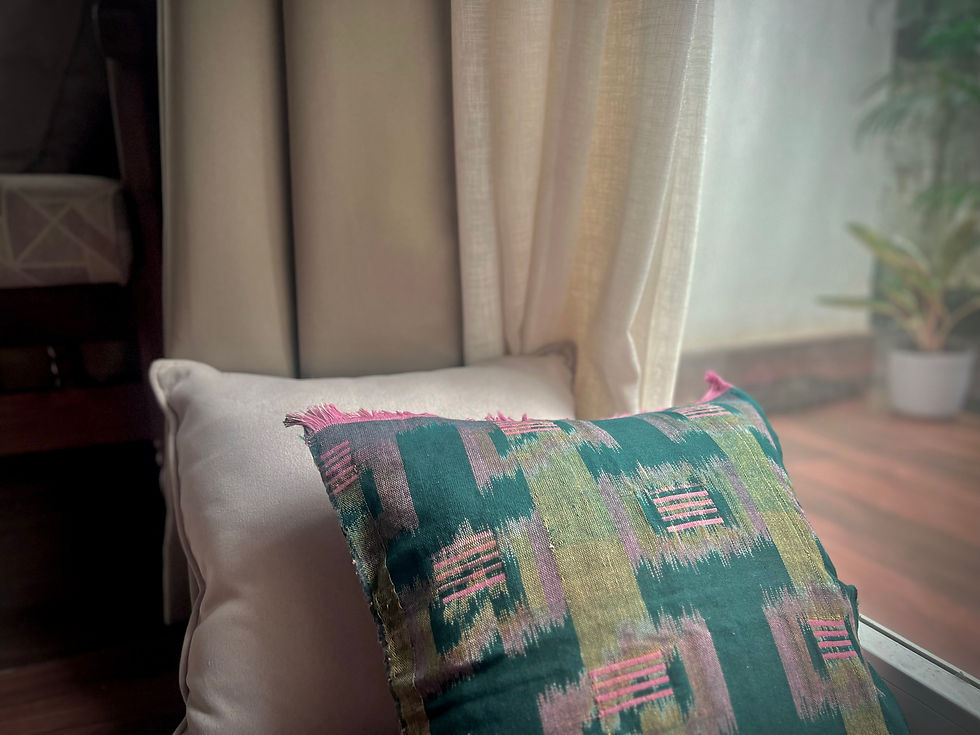
story
I went with simpler, basic shapes and how they interact with the Ikkat
technique. Ikkat has this irregular effect. In my design, the “New Geometries” actually meant how the rigid shapes are going to change according to the irregular effect and how that will create new geometric shapes or effects.


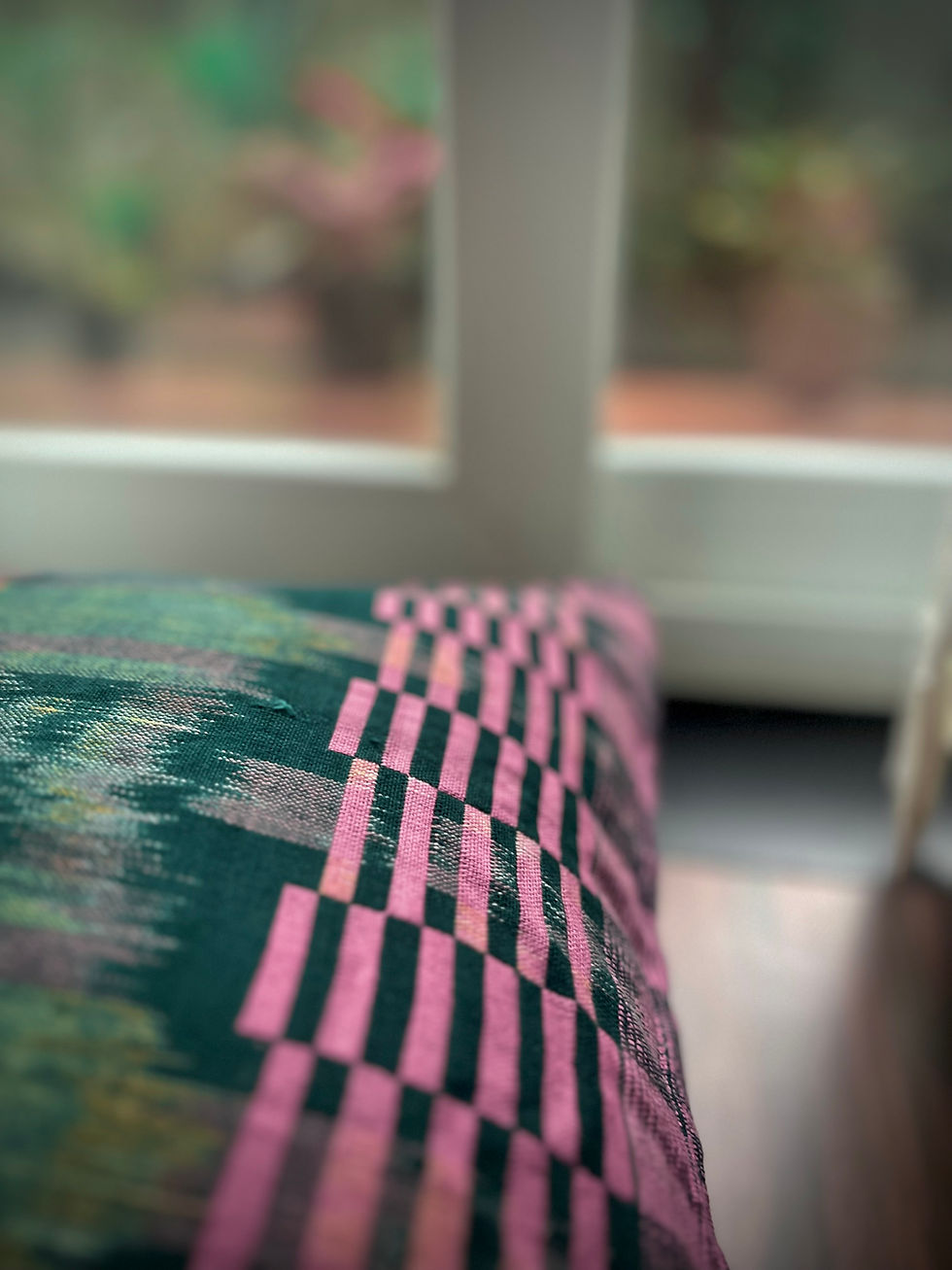

MAIN DESIGN

DOUBLE CLOTH SIDE 1

DOUBLE CLOTH SIDE 2

.
CORDINATES

DOUBLE CLOTH SIDE 1

DOUBLE CLOTH SIDE 2

.


Rectangles were used to create a double-cloth effect, with specific elements transferred into the second layer. Once the primary design was developed, the required shifts were identified and the motifs were distributed across three shafts to achieve the intended visual transitions. By adjusting the shaft order during weaving, the back-layer design could be brought to the front whenever needed. The final output aligned closely with the original concept.


Arnab senapati
Credits - Guidance

@safaportfolio.com